
Baber Johansen

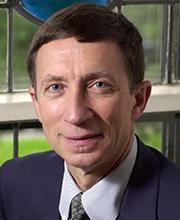
Baber Johansen was appointed Professor of Islamic Religious Studies at Harvard Divinity School in 2005. Prior to his appointment, he served as Directeur d’études at the Ecole des Hautes Etudes en Sciences Sociales (Centre d’étude des normes juridiques), Paris (1995–2005), and Professor for Islamic Studies at the Freie Universität Berlin (1972–1995). In 2006 he was appointed an affiliated professor at Harvard Law School and acting director of its Islamic Legal Studies Program from 2006 to 2010. In 2007 he was affiliated with the Department of Near Eastern Languages and Civilizations, and from July 2010 to June 2013, he was the director of the Center for Middle Eastern Studies. He is also a faculty associate of Harvard’s Weatherhead Center for International Affairs and a member of its Executive Committee.

His research and teaching focus on the relationship between religion and law in the classical and the modern Muslim world. His book Muhammad Husain Haikal Europa und der Orient im Weltbild eines ägyptischen Liberalen (1967), translated into Arabic in Abu Dhabi in 2010, examines twentieth-century liberal interpretations of Islam; Islam und Staat (1982) looks at modern Muslim debates on state models; and Islamic Law on Land Tax and Rent (1988) considers long-term changes in classical and postclassical legal doctrine. Contingency in a Sacred Law: Legal and Ethical Norms in the Muslim Fiqh (1999) focuses on law, social practice, and ethics in Islam.

Johansen has a PhD in Habilitation in Islamic Studies from the Freie Universität Berlin.

William A. Graham

William A. Graham is Harvard University Distinguished Service Professor, and Murray A. Albertson Professor of Middle Eastern Studies (Faculty of Arts and Sciences). Graham served as Dean of Harvard Divinity School from 2002 to 2012, when he stepped down to return to research and teaching. His scholarly work has focused on early Islamic religious history and textual traditions (Qur’an and Hadith), and on topics in the global history of religion.

His book Divine Word and Prophetic Word in Early Islam was awarded the American Council of Learned Societies History of Religions Prize in 1978. He is the author of Beyond the Written Word: Oral Aspects of Scripture in the History of Religion (1987) and Islamic and Comparative Religious Studies(2010). He has co-authored three books and is also the author of numerous articles and reviews.

He is a summa graduate of the University of North Carolina at Chapel Hill and holds honorary doctorates from UNC and Lehigh University.
Mohsen Goudarzi

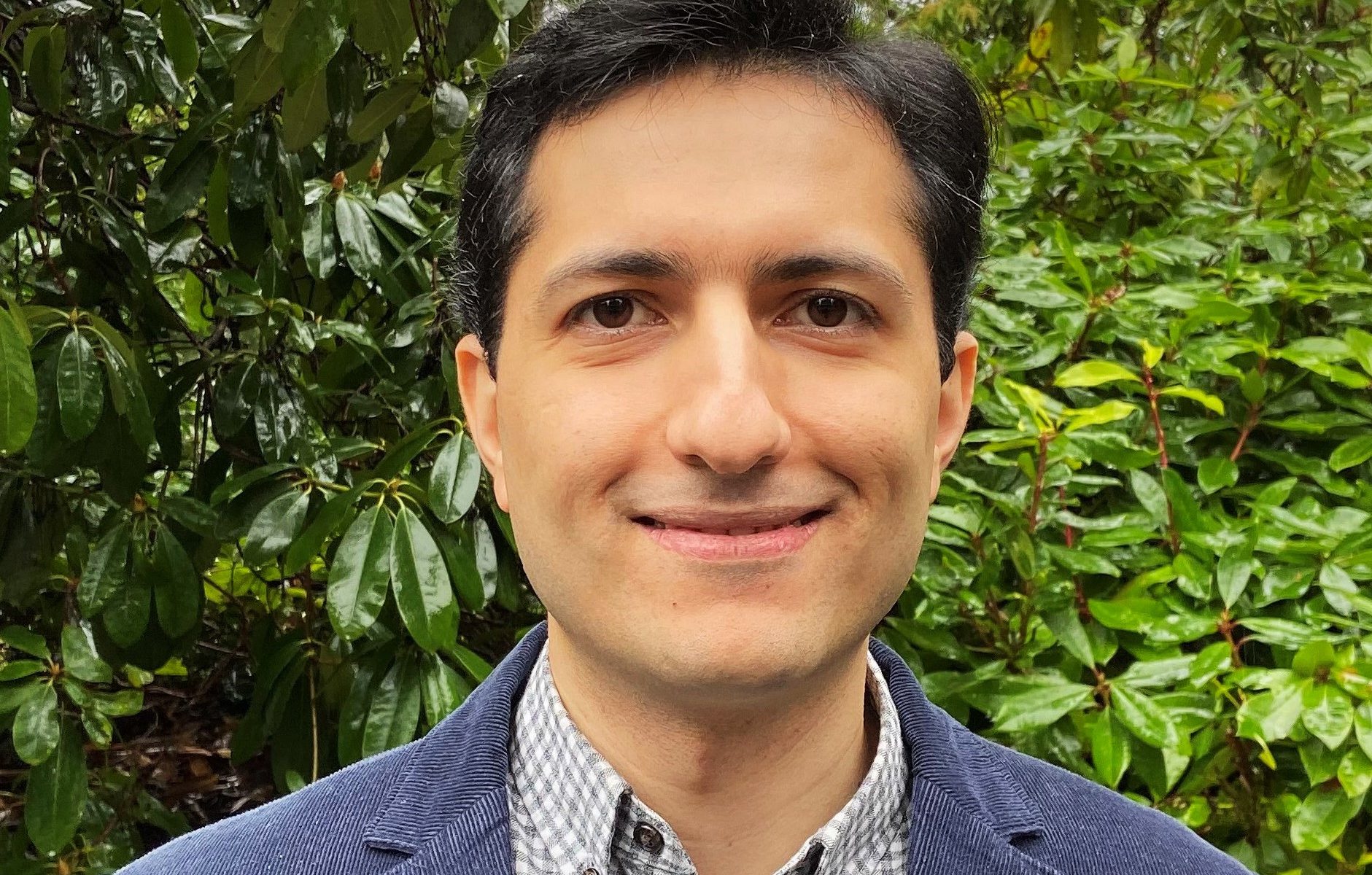
Mohsen Goudarzi is Assistant Professor of Islamic Studies at the Harvard Divinity School. A scholar of the Qur’an and early Islamic history, he has published on the Qur’an’s theological and legal dimensions, its relationship to the Bible and post-biblical literature, its reception in Muslim exegesis, and its textual genesis. His current projects include an article that rethinks the Qur’an’s legal philosophy and a monograph that explores the Islamic scripture’s historical vision. 

Goudarzi obtained his PhD from Harvard’s Committee on the Study of Religion in 2018, after which he taught as Assistant Professor at the University of Minnesota (Twin Cities) for three years, before joining the Harvard Divinity School in July 2021.

Khaled El-Rouayheb

Khaled El-Rouayheb is the James Richard Jewett Professor of Islamic Intellectual History and chair of the Near Eastern Languages & Civilizations department. His research interests include: the intellectual and cultural history of the Arabic-Islamic world in the Mamluk and early-Ottoman periods (1200-1800); the history of Arabic logic; Islamic theology and philosophy. 

His publications include three monographs: Before Homosexuality in the Arabic-Islamic World, 1500-1800 (University of Chicago Press, 2005), Relational Syllogisms & the History of Arabic Logic, 900-1900 (Brill, 2010), and Islamic Intellectual History in the Seventeenth Century (Cambridge University Press, 2015). He has also prepared an edition of Kashf al-asrar ‘an ghawamid al-afkar, a summa of logic by Afdal al-Din al-Khunaji (d.1248) (Iranian Institute for Philosophy, 2010). He is the co-editor (along with Sabine Schmidtke of the Institute of Advanced Studies, Princeton) of The Oxford Handbook of Islamic Philosophy (2016).

He holds a BA in Philosophy from the University of Copenhagen (Denmark), a MA in Middle Eastern History from the American University of Beirut (Lebanon), and a PhD (2003) from the Faculty of Oriental Studies, University of Cambridge (United Kingdom).

Rosie Bsheer

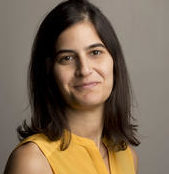
Rosie Bsheer is an historian of the modern Middle East and Assistant Professor of History at Harvard University. She comes to Harvard University from Yale University, where she was Assistant Professor of History (2014–2018). She is the recipient of the Poorvu Family Award for Interdisciplinary Teaching at Yale University (2017) and Yale College’s Sarai Ribicoff ‘75 Award for the Encouragement of Teaching (2018).

Bsheer’s work has been supported by the Mellon Foundation, the American Council of Learned Societies (ACLS), the Social Science Research Council (SSRC), the Whiting Foundation, and the Institute for Religion, Culture, and Public Life.  Her teaching and research interests center on Arab intellectual and social movements, petro-capitalism and state formation, and the production of historical knowledge and commemorative spaces. 

She is the author of Archive Wars: The Politics of History in Saudi Arabia (Stanford University Press, October 2020). he is Associate Producer of the 2007 Oscar-nominated film& My Country, My Country, Co-Editor of Jadaliyya E-zine, and Associate Editor of Tadween Publishing.

She received her Ph.D. in History from Columbia University (2014).