

Roundtable on Knowledge in the Islamic Court
Posted on April 20, 2026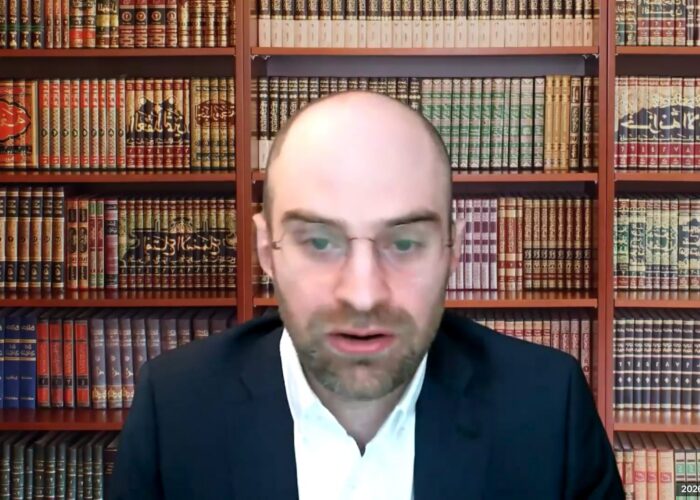
On April 16th at 12pm EST, the Roundtable on Knowledge in the Islamic Court was held via Zoom, marking the concluding event in the ISLAMICLAWblog essay series.
The discussion brought together scholars to examine how Islamic courts construct and evaluate truth in practice. Key themes included what counts as valid proof in Islamic judicial settings, how judges navigate competing claims, and how evolving technologies reshape evidentiary standards. The conversation also raised broader questions about how Islamic law can be understood when attention is centered on its adjudicative procedures, as well as what defines an “Islamic” court or judge in the first place.
Through five case studies, participants reflected on the role of evidence, proof, and legal procedure in shaping judicial reasoning. Focusing primarily on modern and contemporary contexts, the presentations highlighted how rapid social and technological change continues to transform conceptions of proof within Islamic legal systems.
Convened by Nurul Hoda Mohd. Razif (University of Bergen) and Ari Schriber (University of Erfurt), the roundtable featured contributions from Aya Bejermi (University of Bordeaux), Léon Buskens (Leiden University), Dominik Krell (University of Oxford), Irene Schneider (University of Göttingen), and Mashal Saif (Clemson University).
Watch the video today!