
ILSS: Sherman Jackson, The Islamic Secular (Oxford University Press, 2023)
Posted on March 30, 2026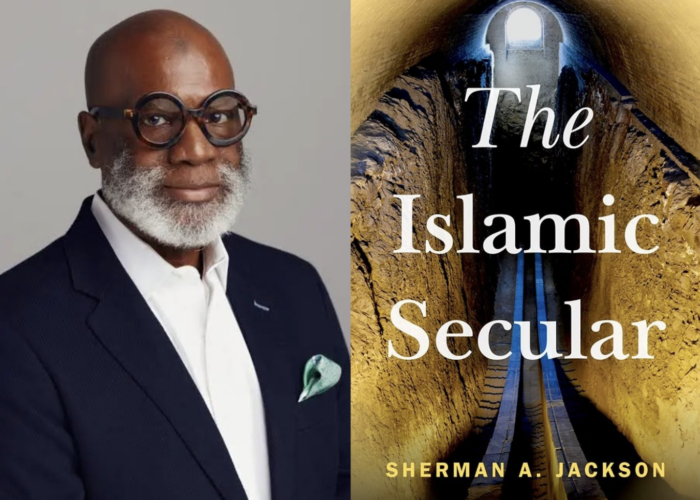
On Tuesday, April 7, 2026, at 12:30-1:30PM US EST, Professor Sherman Jackson (University of Southern California) will give a talk on his publication The Islamic Secular (Oxford University Press, 2023). The basic point of the secular in the modern West is to “liberate” certain pursuits—the state, the economy, science—from the authority of religion. This is also assumed to be the goal and meaning of “secular” in Islam. Professor Jackson argues, however, that this assumption is wrong. In Islam, the “secular” was neither outside “religion” nor a rival to it. “Religion” in Islam was not identical to Islam’s “sacred law,” or “sharīʿa,” nor did classical Muslim jurists see sharīʿa as the all-encompassing, exclusive means of determining what is “Islamic.” In fact, while—as religion—Islam’s jurisdiction was unlimited, sharīʿa’s jurisdiction—as a sacred law—was limited. In other words, while everything remained within the purview of the divine gaze of the God of Islam, not everything could be determined by sharīʿa or on the basis of its revelatory sources. Various aspects of state policy, the economy, science, and the like were “differentiated” from sharīʿa and its revelatory sources without becoming non-religious or un-Islamic. Given the asymmetry between the circumference of sharīʿa and that of Islam as religion, not everything that fell outside the former fell outside the latter. In other words, an idea or action could be non-sharʿī (not dictated by sharīʿa) without being non-Islamic, let alone anti-Islam. The ideas and actions that fall into this category are what Jackson terms “the Islamic Secular.” Crucially, the Islamic Secular differs from the Western secular in that, while the whole point of the Western secular is to liberate various pursuits from religion, the Islamic Secular differentiates these disciplines not from religion but simply from sharīʿa. Similarly, while both secularization and secularism play key roles in the Western secular, both of these concepts are alien to the Islamic Secular, as the Islamic Secular seeks neither to discipline nor to displace religion, nor expand to its own jurisdiction at religion’s expense. The Islamic Secular is a complement to religion, in effect, a “religious secular.” Nowhere are the practical implications of this more impactful than in Islam’s relationship with the modern state. In his book, Jackson makes the case for the Islamic Secular on the basis of Islam’s own pre-modern juristic tradition and shows how the Islamic Secular impacts the relationship between Islam and the modern state, including the Islamic State. Registration is required