
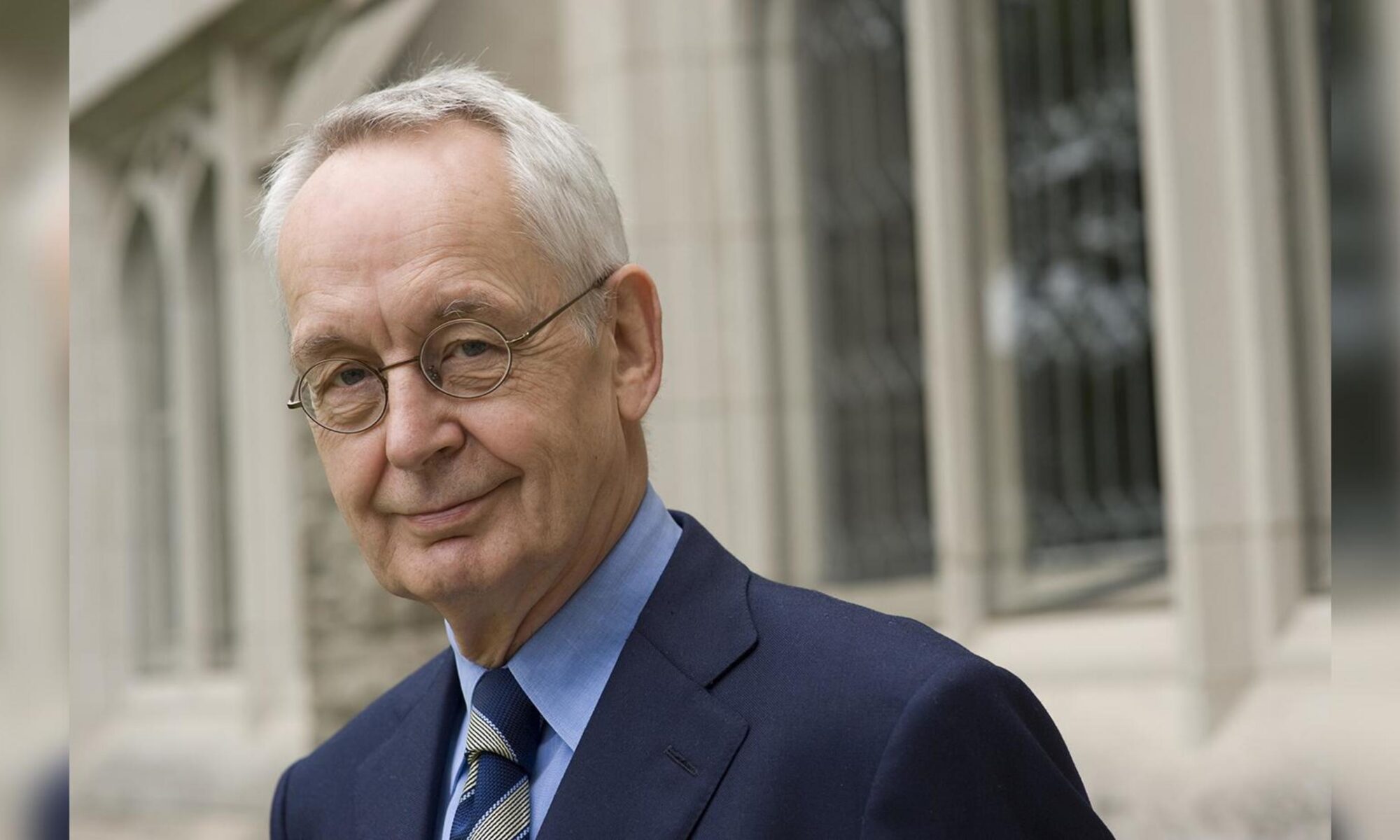
In Memorium: Professor Baber Johansen
Posted on April 08, 2026
We at the Program in Islamic Law at Harvard Law School mark the passing of Baber Johansen, Professor of Islamic Studies Emeritus at Harvard Divinity School. As HDS recently announced, Prof. Johansen passed away in late January 2026. He leaves behind a legacy as a distinguished scholar of Islamic law historically, and as a scholar who left a lasting impact on the modern study of Islamic law and on the many students and scholars he mentored throughout his career.
Professor Johansen’s scholarly research explored the relationship between legal reasoning, ethics, and social practice in Islamic societies, bringing historical depth and nuance to the study of Islamic law. Through influential works such as Islamic Law on Land Tax and Rent (Routledge, 1988) and Contingency in a Sacred Law (Brill, 1999), he illuminated the interpretive richness and internal diversity of Islamic legal traditions and demonstrated how jurists grappled with questions of authority, morality, and changing social realities.
Across Harvard, Professor Johansen contributed to a wide intellectual community. He joined Harvard Divinity School in 2005 and played a key role in strengthening the study of Islam across Harvard University, including as one-time acting director at the Islamic Legal Stidies Program at Harvard Law School (predecessor to PIL), from 2006 to 2010. In addition, he was affiliated with the Department of Near Eastern Languages and Civilizations, served as a faculty associate emeritus at the Weatherhead Center for International Affairs, and directed the Center for Middle Eastern Studies from 2010 to 2013. Through these roles, he helped deepen the University’s engagement with the study of Islam and fostered interdisciplinary conversations among scholars of law, religion, and history.
Through his many intellectual engagements at Harvard and beyond, Professor Johansen’s contribution to the study of Islamic law was profound and enduring. His scholarship brought a rare combination of rigor, depth, and intellectual independence that helped shape the field in lasting ways. He challenged students and colleagues alike to think more carefully, more historically, and more critically about Islamic legal traditions, both past and present. May that legacy continue to resonate.
In the coming weeks and months, as we grapple with news of this loss, we invite the larger community to reflect on his scholarly impact and the role he played in building the intellectual community that many of his students and one-time colleagues still inhabit. May he be remembered with the seriousness and care that he brought to his work.